Mount Fuji’s Hidden Secrets Most Visitors Never Discover
Mount Fuji: Japan’s Sacred Mountain and the Mystery Behind Its Global Fame
Rising gracefully above the Japanese landscape, Mount Fuji is one of the most recognizable mountains in the world.
Its near-perfect cone shape, snow-covered peak, and spiritual significance have made it an enduring symbol of Japan for centuries. Every year, millions of travelers photograph it, paint it, hike it, and admire it from afar.
But Mount Fuji is more than just a beautiful mountain.
It is a volcano, a spiritual pilgrimage site, a cultural icon, and one of the most photographed natural landmarks on Earth.
So what makes Mount Fuji so special?
Let’s explore the history, science, and cultural mystery behind Japan’s most famous mountain.
The Geography of Mount Fuji
Mount Fuji (known in Japan as Fujisan) stands at 3,776 meters (12,389 feet), making it the tallest mountain in Japan.
It is located about 100 kilometers southwest of Tokyo, and on clear days it can even be seen from the capital city.
The mountain sits on the border of two prefectures:
• Shizuoka
• Yamanashi
Around the base of Mount Fuji are the famous Fuji Five Lakes, which provide some of the most iconic views of the mountain.
These lakes include:
• Lake Kawaguchi
• Lake Yamanaka
• Lake Sai
• Lake Shoji
• Lake Motosu
Photographers from all over the world visit these lakes to capture reflections of Fuji in the water.
Mount Fuji Is Actually a Volcano
Despite its calm and peaceful appearance, Mount Fuji is an active stratovolcano.
It formed over thousands of years through repeated eruptions of lava, ash, and volcanic rock.
The last major eruption occurred in 1707, during what is known as the Hōei eruption.
Ash from this eruption reportedly reached Tokyo, which is over 100 kilometers away.
Scientists still consider Mount Fuji active today, although it has remained quiet for more than three centuries.
Because of its geological activity, researchers closely monitor the mountain for signs of future eruptions.
Why Mount Fuji Looks So Perfect
One reason Mount Fuji is so famous is its almost perfectly symmetrical cone shape.
Unlike many rugged mountain ranges, Fuji rises smoothly and dramatically from the surrounding plains.
This elegant shape was created by layers of lava flows that gradually built up the volcano over time.
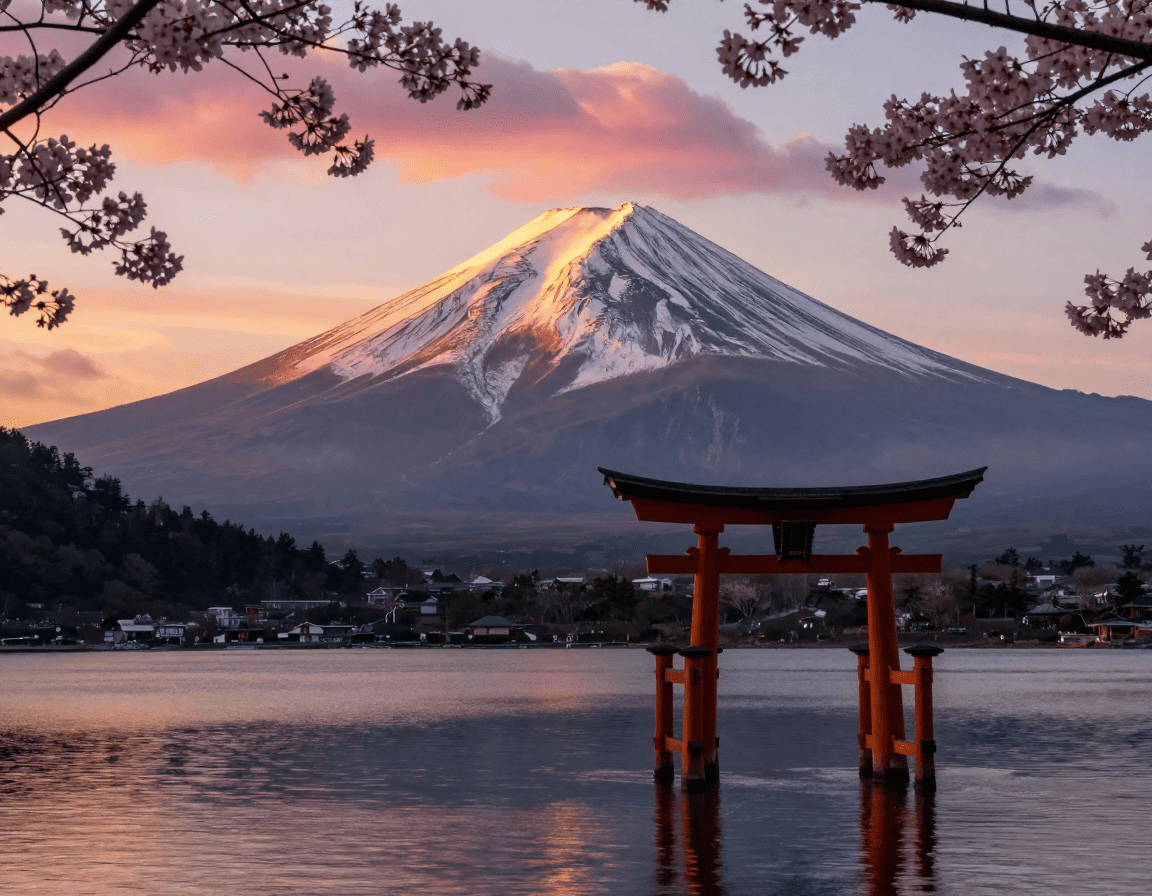
Snow typically covers the summit from October to June, creating the iconic white cap seen in most photographs.
The combination of symmetry, snow, and isolation makes Mount Fuji one of the most visually striking mountains on the planet.
A Sacred Mountain for Centuries
Mount Fuji has deep spiritual significance in Japanese culture.
For over 1,000 years, it has been considered a sacred site in Shinto and Buddhist traditions.
Many people historically believed the mountain was the dwelling place of spirits and deities.
Pilgrimages to the summit became common during the Edo period (1603–1868).
Religious groups known as Fuji-ko organized spiritual climbs to the top of the mountain as acts of purification and devotion.
Even today, some hikers climb Fuji as a spiritual experience rather than simply a physical challenge.
Climbing Mount Fuji
Climbing Mount Fuji has become one of Japan’s most popular outdoor adventures.
The official climbing season typically runs from early July to early September.
During this time, weather conditions are safer and mountain huts are open along the routes.
There are four main trails to the summit:
• Yoshida Trail (most popular)
• Subashiri Trail
• Gotemba Trail
• Fujinomiya Trail
Most climbers begin their ascent in the evening to reach the summit before sunrise.
Watching the sunrise from the top of Mount Fuji is known in Japan as “Goraiko.”
It is considered a deeply emotional and unforgettable moment.
Mount Fuji in Art and Culture
Mount Fuji has inspired artists for centuries.
Perhaps the most famous depiction is the woodblock print series “Thirty-Six Views of Mount Fuji” by the artist Hokusai, created in the 1800s.
One of these prints, “The Great Wave off Kanagawa,” became one of the most recognizable artworks in the world.
The mountain also appears frequently in:
• Japanese poetry
• traditional paintings
• literature
• modern photography
For many Japanese people, Fuji represents beauty, strength, and national identity.
Why Millions of Tourists Visit Every Year
Today, Mount Fuji is one of the most visited natural landmarks in Japan.
Tourists come for many reasons:
• hiking the mountain
• viewing cherry blossoms with Fuji in the background
• photographing the sunrise
• visiting nearby hot springs
• exploring the Fuji Five Lakes region
In 2013, Mount Fuji was officially recognized as a UNESCO World Cultural Heritage Site.
This designation acknowledged both its natural beauty and its cultural importance.
The Mystery and Magic of Fuji
Even though millions of photographs exist, seeing Mount Fuji in person still feels extraordinary.
Part of the magic lies in how the mountain changes constantly with weather, light, and seasons.
Sometimes the peak is hidden behind clouds for days.
Other times it appears suddenly, glowing pink during sunrise or deep purple at sunset.
This unpredictability adds to the mountain’s mystique.
In Japan, there is even a saying:
"A wise person climbs Mount Fuji once. A fool climbs it twice."
The idea is that experiencing Fuji once is enough to appreciate its beauty — but the challenge of climbing it again may be overwhelming.
Why Mount Fuji Still Fascinates the World
In the end, Mount Fuji is more than a mountain.
It is a symbol of nature’s power, spiritual reflection, artistic inspiration, and cultural identity.
Few natural landmarks combine geology, history, spirituality, and beauty as perfectly as Mount Fuji.
And perhaps that’s why, centuries after the first pilgrims climbed its slopes, people around the world still feel drawn to its quiet presence.
SHARE THIS ARTICLE
If you enjoyed learning about Mount Fuji, share this article with someone who loves travel and nature.
Share idea #1:
Send it to a friend who dreams of visiting Japan.
Share idea #2:
Post it on social media with the question: Would you climb Mount Fuji?
Share idea #3:
Save it to Pinterest for your future travel inspiration.